
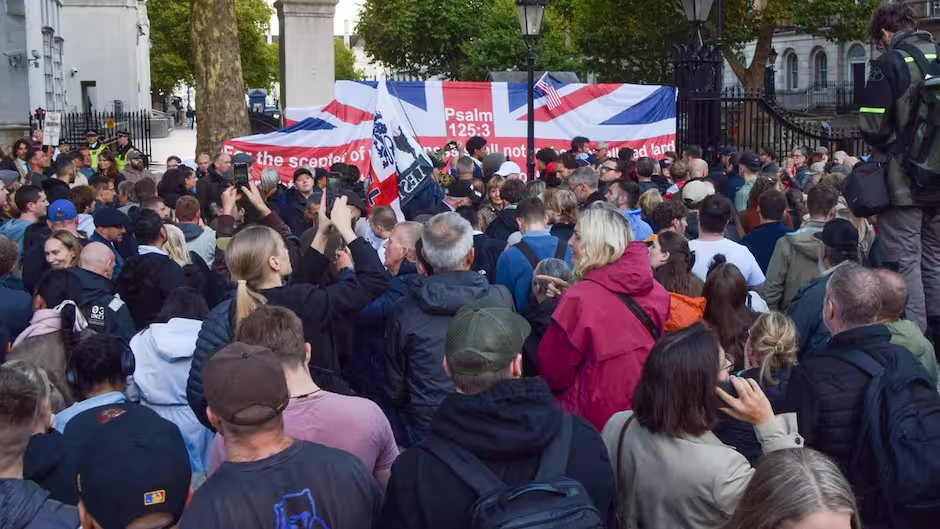
Freedom of expression has been a hotly debated issue in the UK, especially since the arrests that occurred during the coronation of Charles III. The heavy-handed response by Metropolitan Police officers has reignited concerns about the state of public liberties and, to borrow a liberal perspective, raises pressing questions about the limits of a country that seeks to maintain order without infringing on citizens’ rights and freedoms.
Press Freedom Threatened by the Government’s Aggressive Stance
At the heart of this confrontation lies the media’s growing apprehension. Recently, journalists have felt repeatedly challenged, with restrictions on reporting certain topics and on access to key sources. This distrust intensified during the handling of the March 2, 2020, crisis, when the government was widely criticised for its aggressive approach toward information relating to crisis management. Many editorial teams, investigating the handling of the health crisis, found their work dismissed as “falsehoods,” “unfounded allegations,” or “incorrect reporting,” often sparking accusations of persistent misinformation.
This open hostility toward journalists has contributed to unease within the UK media landscape. By publicly undermining well-substantiated reporting, the government has eroded trust between journalists, institutions, and the public. Repeated attacks on the press have also fostered the perception that some media outlets and journalists are adversaries of the state, thereby undermining their role as essential democratic partners.
The situation worsened during daily official press briefings related to the pandemic, where certain journalists were excluded or limited in the questions they could ask. Such restrictions reduce transparency in decision-making on issues that affect the entire population. For organisations like Reporters Without Borders (RSF), this trend represents a direct threat to press freedom in the UK, a country traditionally committed to democratic values.
Repeated statements dismissing reporting with phrases such as “don’t believe everything you read,” “lies,” or “errors” have created a climate of suspicion. Many media professionals see this as a dangerous tactic: destabilising the press weakens a critical counterbalance to power. A weakened press, which serves as a guarantor of transparency in collective decision-making, threatens the proper functioning of democracy.
Today, organisations advocating for freedom continue to call for a change in approach. Preserving freedom of expression requires collaboration between the government, journalists, and institutions, grounded in mutual respect. The risk of mistrust remains, leaving fundamental rights vulnerable to erosion.
Is the UK Limiting Freedom of Expression?
Ultimately, freedom of expression in the UK rests on a fragile balance between liberal tradition and near-absolute parliamentary power. The Human Rights Act plays a crucial role in maintaining this balance. However, in the wake of debates reignited by Brexit, it is clear that this equilibrium remains precarious, and discussions around the limits and protection of free expression are far from settled, largely depending on the political direction of future policies.