
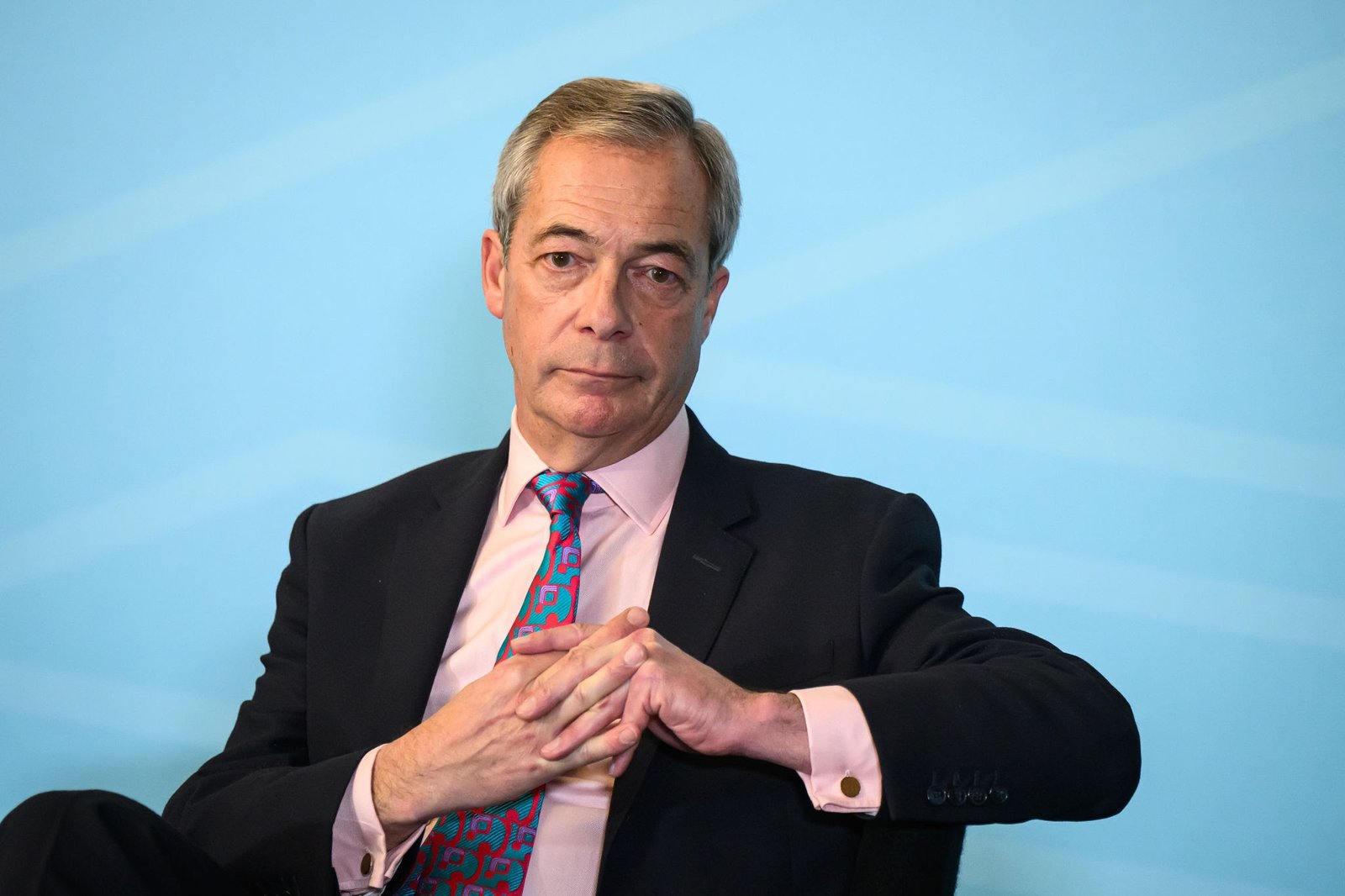
Recent accusations against Nigel Farage, concerning alleged racist and antisemitic remarks he is said to have made during his youth at Dulwich College, have revived a long-standing debate about the moral responsibility of public figures. The politician, who denies any intentional hateful behaviour, now finds himself in a contradictory environment, with former schoolmates accusing him of discriminatory comments and actions. These revelations come at a time when public image and moral consistency are central to citizens’ trust in political institutions.
The Allegations and Farage’s Response
The accusations directed at Nigel Farage date back to his school years, when former classmates claim he made racist or antisemitic remarks. Some even mention chants with hateful undertones or jokes targeting minority groups. Others describe remarks that, although tolerated at the time, would today be seen as completely inappropriate. The variety of testimonies keeps uncertainty alive regarding the accuracy of the incidents described.
Farage insists he never intended to harm anyone and that no one was ever mistreated. He acknowledges that some comments made as a “young boy” could be interpreted differently under today’s social norms. He argues that the scandal exaggerates youthful misjudgements that must be understood in their proper historical and cultural context. His defence strategy seeks to reduce the weight of the allegations by highlighting this shift in time and perspective.
In media appearances, the MEP also claims he is being unfairly targeted by the press and that his “very old” past is being used against him under a “double standard.” He contrasts the accusations with accounts from classmates who say they never witnessed racist behaviour on his part. At the heart of the debate lie subjectivity, memory, and interpretation.
Political, Media and Public Reactions
Political reactions have been swift and firm. British officials particularly those in opposition have demanded a clear explanation from Nigel Farage, arguing the accusations raise serious concerns about his integrity. Some even view the affair as grounds to question his suitability as a leader and the credibility of Reform UK, the party he represents. This political pressure reflects both a call for transparency and an attempt to seize a moment of vulnerability.
In the media, the story has developed into a substantial investigation, fuelled by multiple testimonies and detailed analysis. Debates now revolve around sensitive issues: memory, responsibility, the social roots of racist attitudes, and shifting cultural norms. Journalists aim to unpack the personal experiences of witnesses, the distortions of memory, and how these accounts fit into Farage’s broader personal history. The media coverage has undeniably amplified the affair’s impact on public opinion.
Among the public, reactions are divided. Some argue that one should not be harshly judged for teenage behaviour, especially in the absence of concrete evidence. Others believe these revelations align with a pattern of controversial political positions. This polarisation mirrors the growing sensitivity of citizens to issues of diversity, racism, and public ethics, giving the controversy significant social and political weight.
What Future for Nigel Farage?

Farage’s political future may largely depend on how public perception evolves. A segment of his voter base might see the accusations as an attempt to undermine him. If so, he may be able to maintain his core support and remain politically relevant especially if no new evidence emerges to substantiate the allegations. Time could also work in his favour, gradually pushing the issue out of the media spotlight.
However, the affair may have longer-term consequences for his reputation, particularly among moderate voters or those concerned with inclusion. His reluctance to issue a clear apology or firmly distance himself from the allegations could reinforce the perception of a lack of empathy. At a moment when ethical standards are central to public life, even actions from decades past can weaken a political career and limit the prospects of his party.
Ultimately, the controversy highlights a profound societal shift: a leader is now judged not only on present actions but on the entirety of their personal history. Nigel Farage will need to navigate between justification, strategic communication, and public expectations. His ability to adapt will be decisive for his political survival in a climate where the past can no longer be easily erased.