
The Centralisation Challenge
The United Kingdom remains one of the most centrally governed developed nations in the world. For decades, strategic decision-making, policy formulation, and significant financial control have been heavily concentrated within the Whitehall apparatus. The result is a persistent and stark economic imbalance, creating an environment where a “one-size-fits-all” policy often fails to address the distinct needs, strengths, and challenges of regions outside of London and the South East.
The concept of devolution—the transfer of powers from central to local government—is the political response to this endemic centralisation. This article examines how the establishment of powerful city-regions, led by directly elected Metro Mayors, is fundamentally redefining Britain’s political and economic geography, and testing the limits of regional autonomy.
II. The Engine of Devolution: City-Regions and Metro Mayors
The most potent form of devolution in England has been the establishment of Mayoral Combined Authorities (MCAs), creating functional economic entities known as city-regions.
1. The Power of the Mandate
The introduction of directly elected Metro Mayors (such as in Greater Manchester, West Midlands, and Liverpool City Region) has been critical. Unlike traditional local council leaders, Mayors hold a direct electoral mandate across a coherent economic geography. This mandate grants them the necessary political weight and ‘soft power’ to convene local partners—businesses, universities, and health bodies—and to negotiate with central government more effectively. They act as strategic champions, capable of making tough decisions and providing clear accountability on issues like transport and skills.
2. Devolved Powers and Long-Term Funding
Devolution deals are designed to align responsibility with funding, allowing Mayors to tailor policy to local labour markets. Core devolved areas typically include:
-
Skills and Adult Education: Allowing city-regions to align vocational training with local employer needs.
-
Transport and Infrastructure: Granting control over integrated public transport networks (e.g., bus franchising and local rail).
-
Housing and Planning: Providing funds and authority for brownfield development and strategic spatial planning. Crucially, these deals often include long-term, consolidated investment funds (e.g., 30-year pots), which allow local leaders to plan strategically without the constant reliance on short-term, competitive Whitehall bidding rounds.
III. The Test of Asymmetry: Challenges to Coherence
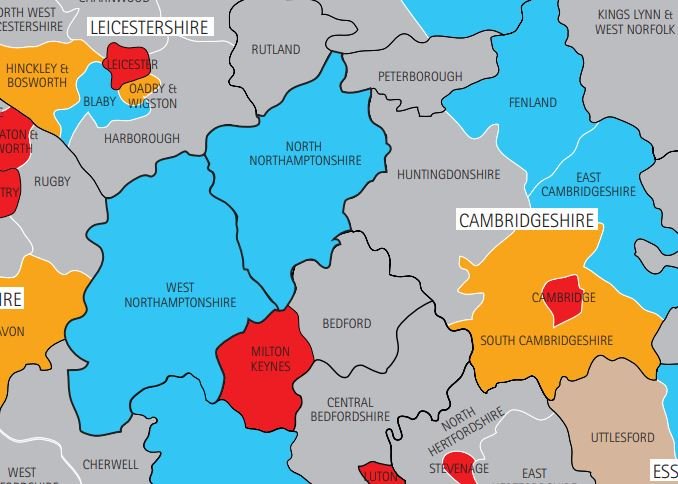
Despite the successes in pioneer regions like Greater Manchester, the process of English devolution is far from uniform, creating a complex, often confusing, map of powers.
1. The Patchwork Devolution Landscape
English devolution has proceeded on an asymmetric, “deals-based” model, meaning each deal is negotiated individually and the powers granted vary from one city-region to the next. This has created a fragmented governance landscape where some areas benefit from expansive ‘trailblazer’ powers, while others are left with minimal control. This asymmetry creates complexity for central government and risks exacerbating regional inequalities, as areas with greater local capacity are often the ones best positioned to secure the most comprehensive deals.
2. The Fiscal Autonomy Deficit
A persistent criticism is the limited degree of fiscal autonomy accompanying the devolved powers. While Mayors gain control over spending in certain areas, their power to raise revenue (e.g., through local taxation or retention of a share of national taxes) remains limited. True regional autonomy—the ability to be fully accountable to local taxpayers for both income and expenditure—will require a fundamental shift in the central government’s control over local finance.
IV. Conclusion: Towards a More Balanced Union
The trend towards powerful city-regions is irreversible and essential for unlocking growth across the UK. It is a necessary step in addressing the deep-seated economic imbalances and geographical inequality that have characterized the British economy for decades.
For this devolution revolution to succeed fully, it must evolve from an ad-hoc arrangement into a coherent, principle-based framework. Future policy must focus on: standardizing a baseline of powers available to all interested regions; enhancing financial autonomy; and ensuring that regions with lower institutional capacity receive the necessary support to take up and effectively manage devolved responsibilities. Ultimately, unlocking local power is not just an economic strategy; it is a necessary reform to ensure a more resilient, equitable, and democratic future for the entire United Kingdom.