
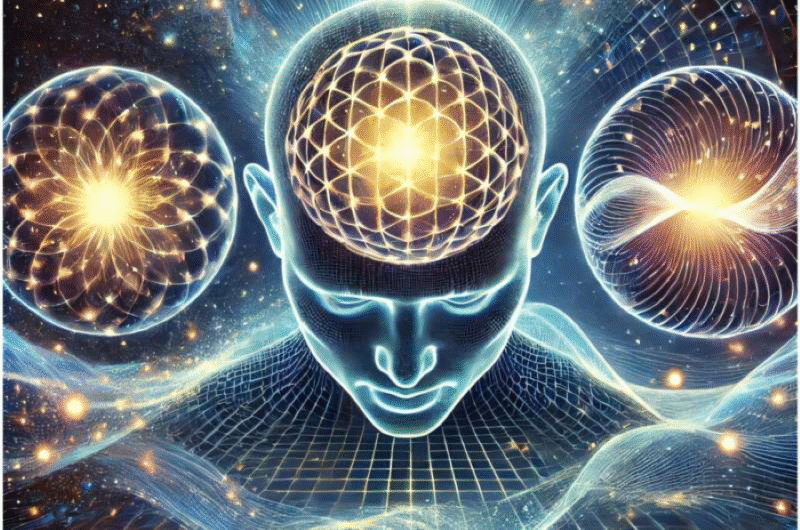
A physicist proposes a bold theory that could revolutionise our understanding of human consciousness and provide scientific explanations for phenomena long deemed inexplicable. This theoretical hypothesis seeks to establish a link between quantum physics and subjective experiences that challenge traditional scientific paradigms.
Rethinking consciousness in light of unexplained phenomena
Professor Maria Strømme, the physicist in question, has developed a new hypothesis addressing essential questions that have so far lacked satisfactory answers. Her approach stands out by striving to create a robust theoretical framework to examine human experiences that have been largely overlooked within scientific research.
The theory aims to explain various phenomena such as extrasensory perceptions, near-death experiences, and even the hypothesis of continued existence after biological death. From this perspective, these phenomena often labelled as paranormal or mysterious could be studied using contemporary physics concepts.
The hypothesis suggests that consciousness is not solely the result of neurological processes within the brain but may also interact with still-mysterious physical dimensions. This view challenges the prevailing materialist model that regards the mind merely as a byproduct of brain activity.
Implications for understanding death

One of the most provocative aspects of this theory directly addresses what happens at the moment of death. Contrary to the traditional belief that consciousness ceases when brain functions stop, this novel model offers a radically different perspective.
According to the hypothesis, consciousness might not be exclusively tied to the brain’s biological substrate. This proposal opens the door to new interpretations of accounts from individuals who have experienced near-death states, often describing perceptions and sensations occurring when their measurable brain activity was absent or significantly diminished.
The physicist suggests that certain features of consciousness might persist or evolve in ways that current measurement methods cannot detect. This viewpoint is grounded not in metaphysical speculation but in concepts derived from quantum physics and information theory.
Research into altered states of consciousness, out-of-body experience reports, and consistent testimonies collected in hospital settings provide several leads indicating that the relationship between consciousness and brain matter might be more complex than previously believed.
A paradigm shift for science

This hypothesis fits within a broader movement aiming to transcend the limitations of reductionist neuroscience models. Many researchers now acknowledge that understanding consciousness is one of the greatest challenges in current research, potentially requiring a fundamental reassessment of core principles.
The proposed hypothesis seeks to build mathematical and experimental foundations for phenomena that science has often neglected or dismissed. Should it be validated through rigorous experimental protocols, it would mark a radical turning point in our understanding of reality and consciousness’s role in the physical universe.
The implications extend far beyond academia, touching on fundamental philosophical questions about the nature of lived experience, individual identity, and the meaning of life. However, the researcher admits that her work remains hypothetical and will require years of investigation for validation or refutation.
This innovative theory offers a scientific reinterpretation of phenomena that have traditionally eluded rational analysis. While speculative, it provides a potentially rich conceptual framework to explore the limits of consciousness and challenge our assumptions about what the mind is. Future advances in this research could transform our view of what defines human experience and what, if anything, endures after the physical body ceases.