

Channel 4 is preparing to make a crucial leadership decision at a delicate moment for the UK’s broadcasting landscape. Among the contenders is Emma Lloyd, a senior Netflix executive whose rising visibility sparks interest as the industry navigates digital transformation, shifting audience behaviour and a weakening advertising model. A leadership change of this scale could shape the channel’s medium- and long-term future. This management race offers an opportunity to analyse the situation through three balanced angles.
Emma Lloyd’s Profile and the Reasons Behind Her Positioning
Still at the forefront within Netflix, Emma Lloyd oversees partnerships across Europe, the Middle East and Africa, while also bringing significant experience from Sky, one of the UK’s major media groups. Her career effectively bridges global streaming expertise and traditional television at a time when both worlds are converging an alignment that strengthens her credibility at this pivotal moment.
She also spent nearly ten years on the board of Ocado Group, where she deepened her expertise in governance, commercial strategy and change management. These are valuable assets for a public broadcaster facing major
structural challenges. Her recent resignation from that board position may even signal a readiness to take on new responsibilities.
Lloyd’s candidacy is striking because it embodies the connection between digital innovation and the management of traditional media outlets. At a time when viewer habits are evolving at unprecedented speed, Channel 4 could benefit from a leader who understands both environments. This positions Lloyd as a candidate aligned with the direction the channel seeks as it continues its modernisation.
Channel 4’s Key Challenges and Why Emma Lloyd’s Appointment Matters
Confronted with an advertising model weakened by the rise of competing digital platforms, Channel 4 faces deep audience fragmentation, declining linear television consumption and increasingly volatile revenue streams. In this climate, appointing a leader with a strong digital vision appears essential to securing the company’s future especially as the internal “Fast Forward” strategy explicitly aims to accelerate transformation.
With the departure of Chief Executive Alex Mahon, the moment becomes even more decisive. Her tenure was marked by intense debate over the proposed privatisation of Channel 4, a plan ultimately abandoned by the government. Future leadership will need to define the organisation’s path, both editorially and economically, while still asserting its public-service identity. The success of this modernisation without abandoning its public mission will be critical.
It is also vital to stabilise internal tensions, which have increased due to past restructurings and strategic adjustments. Any leadership transition risks reigniting these pressures. With her background in steering rapid organisational change, a leader like Lloyd could help consolidate teams and guide the company through this sensitive period. Her profile appears well suited to the nature of the challenges Channel 4 must overcome to remain competitive.
Emma Lloyd: Potential Impact of a Streaming-Led Leadership
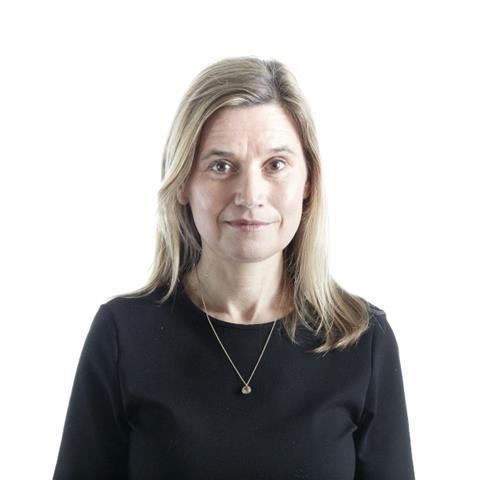
Appointing a leader with a Netflix background would send a strong signal across the UK broadcasting sector. It would suggest that Channel 4 is ready to enter a more decisively digital era one likely to include expansion of its in-house streaming platform, more hybrid content formats, increased international partnerships and a more balanced approach between linear broadcasting and digital services.
That said, Channel 4’s public identity is not a minor concern. The channel is tasked with offering accessible, diverse and socially engaged programming. The next leadership will need to balance innovation with the preservation of this distinctive editorial mission. A leader experienced in both global streaming and traditional broadcasting may be uniquely positioned to achieve this. Transformation cannot come at the expense of the channel’s foundational values.
Such a nomination could also push other broadcasters to accelerate their own digital strategies. BBC, ITV and others might feel compelled to speed up their transitions. Channel 4’s choices could therefore reshape part of the national broadcasting landscape. Regardless of the final decision, one trend is unmistakable: the UK’s public service media is
undergoing a profound transformation.